Family Update February 2026
Greetings, Saints of King's Church!
This month as part of our continuing series on the elements of our worship, the elders have asked Kaleb Trotter to author this month's newsletter entry. We hope you find it helpful as we seek to further understand and educate our people on what Covenant Renewal Worship is.
Ben, for the elders
Ben, for the elders
Devotion for Life and Joy
In January‘s newsletter, we meditated on the purpose of the call to worship and how it prepares us as we enter into worshiping our Lord, the God of heaven and earth. The next major element in our service is the confession of sin. Having a part of our weekly worship service dedicated to the confession of sin ought to prompt a few questions from us: Why do we have a confession of sin? What should we be learning from it? And how does it connect to the rest of our worship service?
Why do we have a confession of sin?
Leviticus 9 gives us an order of service for the worship of God’s people, which is one of the patterns for the covenant renewal form of worship. Because this order was given by God Himself, we want to understand that pattern and learn from it. Obviously we won’t be pouring out the blood of lambs, bulls, and goats, because we have something far better. But the patterns and order are still instructive for us, and teach us how to rightly order our worship of God.
In verse 8 of Leviticus 9, the first offering after the people enter into worship is the offering that cleanses from sin. The summary in verse 22 confirms this order: “Then Aaron lifted his hand toward the people, blessed them, and came down from offering the sin offering, the burnt offering, and peace offerings.” God’s people begin worship with an acknowledgement of our sinfulness and God’s righteousness.
Similarly, when the children of Israel came to Mount Sinai to receive the law, God required before He spoke the law to them that they ceremonially wash, then put on new clothes, and then offer sacrifices of atonement. In order to be ready to receive God‘s perfect law, in order to be truly consecrated to him, we must first be washed clean of our old selves and lives.
In the wedding supper that Christ describes in Matthew 22, every guest receives a new and clean wedding garment upon entering the feast. As we enter the feast of worship, we too must receive new garments, the garments of Christ’s righteousness. Washed clean by baptism, clothed in Christ’s righteousness, we are ready to offer our thanksgiving to God.
So why do we have a confession of sin? Because Scripture teaches us that after we enter into worshiping the Lord, the first thing we should do is to cleanse ourselves.
What should we be learning from the confession of sin?
In a certain sense, our confession of sin every Sunday is a performative action — it doesn’t change anything. How could kneeling and confessing on our own fundamentally change God‘s attitude toward us? Nothing that we could do would be sufficient to convince the Judge of all the earth to change His verdict.
And yet, of course, what we do in the confession is a transformational action — we are completely changed by confessing our sins. Our weekly confession does not enact our regeneration (otherwise you’d be un-saved if you were disciplining a kid during this particular 10 minutes), but in the confession we are re-enacting our sanctification in miniature. The husband who says “I love you” to his wife hasn’t recreated his marriage covenant, but he has reaffirmed his commitment to that same covenant. In the same way, confessing our sins doesn’t make us one with Christ. It does reaffirm our love of our Savior, our hatred of our sins, and our commitment to walking in the ways that delight Him. So what is the transformation that confession creates in us?
First, we become obedient sons. We agree with our Father that our actions were wrong, and so we step back into fellowship with Him. The first step of reconciliation is to return, to come face to face with the Father whom we have wronged. By confessing, we come before His face and agree in obedience that He is in the right, and we are not.
Second, we are turned into faithful image bearers. We name our sins correctly, and so we become faithful Adams, naming things correctly like God Himself does. We cannot confess clinical addictions or feelings to God, we confess sins, and so we have to call our sins what God calls those sins. We don’t confess addiction to alcohol, we confess drunkenness. We don’t confess talking a little bit too long about our neighbor, we confess gossip or slander.
Third, we are united to a righteous people. We do all of these things as a body, kneeling together. This reminds us that each of us is kneeling. Your parents, your children, your deacons, your elders, all of us kneel together because we are all sinners saved by grace. If you ever wonder why you just can’t get your life together, why you are such a failure, remember that every Sunday your brothers and sisters kneel down with you to confess their sins too.
Finally, we stand up into new life and new action. When we kneel down, we are coming to God in the position of a supplicant – contrite, humble, and penitent. We are, with our head bowed and on our knees, in the position of a man about to be beheaded: because we have used our lives to sin against our Creator, we are no longer worthy of the life He gave us. Yet this is why Christ died – so that, “if we have been united with him in a death like his, we shall certainly be united with him in a resurrection like his” (Romans 6:5). We stand up because, like the pilgrim Christian kneeling at the foot of the cross, our burden has been taken away and we can stand upright. Christ has been raised, and so we can now walk in the newness of life. We stand up because God truly is faithful and just to forgive us of all of our sins and to cleanse us from all unrighteousness. We stand up to acknowledge that our whole life is now Christ's to command because He has given us life. We stand up as free sons, ready for our Father to give us a new mission.
So what do we learn from the confession of sin?
While nothing we do can change God’s disposition toward us, we should always be seeking to put our sins to death and walk instead in the ways that delight our Father. When we do confess rightly, we are changed more and more into obedient children of God: faithful image bearers who are united more and more to one another.
How does the confession of sin relate to the rest of worship?
The only right response to Christ’s grace is to offer all that we are back to Him. When we only deserved death, He has given us life and freedom, and so the next step in our worship is to acknowledge that our whole life is His to command.
This is why, after the confession, we recite the sursum corda (Latin for, “we lift our hearts“). The only right response to God‘s absolution and pardon is to give Him our hearts and our lives. And so the preacher leads by saying, “we lift up our hearts,” and the people agree, “we lift them up to the Lord.”
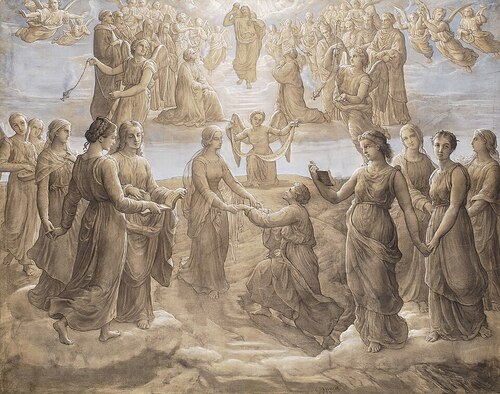
Now that we have been cleansed and re-clothed in the righteousness of Jesus, we are prepared for the rest of worship. When the children of Israel were cleansed, they found themselves at the foot of Mount Sinai, with all of its lightnings and thunder and terror. We found ourselves in the very throne room of Heaven, there to worship our Lord in the beauty of His holiness.
Because we are there, in the Heavenly courts of God, the prayer after the sursum corda often includes the phrase, “Therefore with angels and archangels, and with all the saints in heaven, and with all the church on earth, we laud and magnify Your glorious Name.” There in heaven we find ourselves with the angels and with the saints who have gone before us. As it turns out, there too is the rest of the Church around the world who are worshiping God that day. And because we are in heaven, we sing the song that we know from Isaiah and Revelation is sung by the angels there: “Holy, holy, holy, Lord God of hosts. Heaven and earth are full of your glory, hosanna in the highest!” This song, the Sanctus, is yet another reminder that our worship, by faith, happens in the heavenly throne room, where we have been invited by our gracious Savior.
So how does the confession of sin relate to the rest of worship? Cleansed of the sins of the old man, we offer to God our hearts and our lives as living sacrifices, and are then ready to enter into the throne room of heaven so that we can worship Him there.
Conclusion
Hopefully this gives you a greater appreciation of the role that confession of sin plays in our worship. Growing up as a Baptist in the Bible belt, visitors often thought that the confession of sin, with its kneeling and corporate recital, was the most catholic thing they had experienced in a church service. But as we have seen, that is quite nearly the opposite of the truth. The confession is our reminder that no works we could do, no correct confession or personal penitence, could atone for the sins that we have already committed. And yet, every week, we stand up and enter the very throne room of heaven. We stand up and enter because when we were sons of dishonor, fleeing back to our Father covered in shame and disgrace, He met us on the road and embraced us. We enter into the throne room of heaven to be consecrated as His sons because He first loved us.
Why do we have a confession of sin?
Leviticus 9 gives us an order of service for the worship of God’s people, which is one of the patterns for the covenant renewal form of worship. Because this order was given by God Himself, we want to understand that pattern and learn from it. Obviously we won’t be pouring out the blood of lambs, bulls, and goats, because we have something far better. But the patterns and order are still instructive for us, and teach us how to rightly order our worship of God.
In verse 8 of Leviticus 9, the first offering after the people enter into worship is the offering that cleanses from sin. The summary in verse 22 confirms this order: “Then Aaron lifted his hand toward the people, blessed them, and came down from offering the sin offering, the burnt offering, and peace offerings.” God’s people begin worship with an acknowledgement of our sinfulness and God’s righteousness.
Similarly, when the children of Israel came to Mount Sinai to receive the law, God required before He spoke the law to them that they ceremonially wash, then put on new clothes, and then offer sacrifices of atonement. In order to be ready to receive God‘s perfect law, in order to be truly consecrated to him, we must first be washed clean of our old selves and lives.
In the wedding supper that Christ describes in Matthew 22, every guest receives a new and clean wedding garment upon entering the feast. As we enter the feast of worship, we too must receive new garments, the garments of Christ’s righteousness. Washed clean by baptism, clothed in Christ’s righteousness, we are ready to offer our thanksgiving to God.
So why do we have a confession of sin? Because Scripture teaches us that after we enter into worshiping the Lord, the first thing we should do is to cleanse ourselves.
What should we be learning from the confession of sin?
In a certain sense, our confession of sin every Sunday is a performative action — it doesn’t change anything. How could kneeling and confessing on our own fundamentally change God‘s attitude toward us? Nothing that we could do would be sufficient to convince the Judge of all the earth to change His verdict.
And yet, of course, what we do in the confession is a transformational action — we are completely changed by confessing our sins. Our weekly confession does not enact our regeneration (otherwise you’d be un-saved if you were disciplining a kid during this particular 10 minutes), but in the confession we are re-enacting our sanctification in miniature. The husband who says “I love you” to his wife hasn’t recreated his marriage covenant, but he has reaffirmed his commitment to that same covenant. In the same way, confessing our sins doesn’t make us one with Christ. It does reaffirm our love of our Savior, our hatred of our sins, and our commitment to walking in the ways that delight Him. So what is the transformation that confession creates in us?
First, we become obedient sons. We agree with our Father that our actions were wrong, and so we step back into fellowship with Him. The first step of reconciliation is to return, to come face to face with the Father whom we have wronged. By confessing, we come before His face and agree in obedience that He is in the right, and we are not.
Second, we are turned into faithful image bearers. We name our sins correctly, and so we become faithful Adams, naming things correctly like God Himself does. We cannot confess clinical addictions or feelings to God, we confess sins, and so we have to call our sins what God calls those sins. We don’t confess addiction to alcohol, we confess drunkenness. We don’t confess talking a little bit too long about our neighbor, we confess gossip or slander.
Third, we are united to a righteous people. We do all of these things as a body, kneeling together. This reminds us that each of us is kneeling. Your parents, your children, your deacons, your elders, all of us kneel together because we are all sinners saved by grace. If you ever wonder why you just can’t get your life together, why you are such a failure, remember that every Sunday your brothers and sisters kneel down with you to confess their sins too.
Finally, we stand up into new life and new action. When we kneel down, we are coming to God in the position of a supplicant – contrite, humble, and penitent. We are, with our head bowed and on our knees, in the position of a man about to be beheaded: because we have used our lives to sin against our Creator, we are no longer worthy of the life He gave us. Yet this is why Christ died – so that, “if we have been united with him in a death like his, we shall certainly be united with him in a resurrection like his” (Romans 6:5). We stand up because, like the pilgrim Christian kneeling at the foot of the cross, our burden has been taken away and we can stand upright. Christ has been raised, and so we can now walk in the newness of life. We stand up because God truly is faithful and just to forgive us of all of our sins and to cleanse us from all unrighteousness. We stand up to acknowledge that our whole life is now Christ's to command because He has given us life. We stand up as free sons, ready for our Father to give us a new mission.
So what do we learn from the confession of sin?
While nothing we do can change God’s disposition toward us, we should always be seeking to put our sins to death and walk instead in the ways that delight our Father. When we do confess rightly, we are changed more and more into obedient children of God: faithful image bearers who are united more and more to one another.
How does the confession of sin relate to the rest of worship?
The only right response to Christ’s grace is to offer all that we are back to Him. When we only deserved death, He has given us life and freedom, and so the next step in our worship is to acknowledge that our whole life is His to command.
This is why, after the confession, we recite the sursum corda (Latin for, “we lift our hearts“). The only right response to God‘s absolution and pardon is to give Him our hearts and our lives. And so the preacher leads by saying, “we lift up our hearts,” and the people agree, “we lift them up to the Lord.”
Now that we have been cleansed and re-clothed in the righteousness of Jesus, we are prepared for the rest of worship. When the children of Israel were cleansed, they found themselves at the foot of Mount Sinai, with all of its lightnings and thunder and terror. We found ourselves in the very throne room of Heaven, there to worship our Lord in the beauty of His holiness.
Because we are there, in the Heavenly courts of God, the prayer after the sursum corda often includes the phrase, “Therefore with angels and archangels, and with all the saints in heaven, and with all the church on earth, we laud and magnify Your glorious Name.” There in heaven we find ourselves with the angels and with the saints who have gone before us. As it turns out, there too is the rest of the Church around the world who are worshiping God that day. And because we are in heaven, we sing the song that we know from Isaiah and Revelation is sung by the angels there: “Holy, holy, holy, Lord God of hosts. Heaven and earth are full of your glory, hosanna in the highest!” This song, the Sanctus, is yet another reminder that our worship, by faith, happens in the heavenly throne room, where we have been invited by our gracious Savior.
So how does the confession of sin relate to the rest of worship? Cleansed of the sins of the old man, we offer to God our hearts and our lives as living sacrifices, and are then ready to enter into the throne room of heaven so that we can worship Him there.
Conclusion
Hopefully this gives you a greater appreciation of the role that confession of sin plays in our worship. Growing up as a Baptist in the Bible belt, visitors often thought that the confession of sin, with its kneeling and corporate recital, was the most catholic thing they had experienced in a church service. But as we have seen, that is quite nearly the opposite of the truth. The confession is our reminder that no works we could do, no correct confession or personal penitence, could atone for the sins that we have already committed. And yet, every week, we stand up and enter the very throne room of heaven. We stand up and enter because when we were sons of dishonor, fleeing back to our Father covered in shame and disgrace, He met us on the road and embraced us. We enter into the throne room of heaven to be consecrated as His sons because He first loved us.
Hallelujah!
For the Lord our God the Almighty reigns...
On his robe and on his thigh he has a name written,
'King of kings and Lord of lords'.
~ Revelation 19
For the Lord our God the Almighty reigns...
On his robe and on his thigh he has a name written,
'King of kings and Lord of lords'.
~ Revelation 19
Recent
Archive
2026
February
2025